

Science based. Research driven.®
Keeping the informed and scientific beat on amino acid and fatty acid nutrition for dairy cattle.
Fat or Fatty acids? How do we use them to understand nutrient value?
In general, the chemical nature and content of lipids in different feed ingredients used in ruminant diets is heterogeneous. As research in animal nutrition progresses, there is a greater understanding of nutrient utilization and value by farm animals. In order to develop advanced computer models for how to best feed and predict performance in domestic animals, accurate data is required. To ensure accurate data, it is necessary to examine the procedures by which data are obtained, the methods used, and the value of each fraction for different methods.
From a nutritional standpoint, “fat” is a generic term to describe dietary compounds that are predominantly fatty acids. The lipid content of common feedstuffs varies from less than 1% in some byproducts to 100% in some fat supplements. However, to truly understand nutrient value and consider balancing diets for fatty acids, one needs to understand the difference between fat and fatty acids, and the different methods used for measurement. A quick description of the methods is below:
- Crude fat (Ether extract): the official method still used to determine the lipid portion of a given ingredient. Crude fat is usually the lipid fraction of a feed and is determined by solvent extraction. The most common method is ether extraction.
- Ether extract (acid hydrolysis): It is a modified version of the ether extract method that includes a wash with an acid to improve the release of fat from some samples. For instance, Ca-salts of fatty acids should be analyzed using this method over the conventional ether extract.
- Fatty acids: determines the total fatty acid concentration in feed samples by converting fatty acid and the acyl components in all lipid classes to methyl esters. Fatty acid methyl esters are then quantified by gas-liquid chromatography, which provides information on both fatty acid quantity and profile in a single analysis.
The new NASEM (2021) model moved from using ether extract to fatty acids. When using ether extract, a significant amount of nonnutritive lipids are measured (waxes, pigments, etc.). This may overestimate the lipid fraction and the nutritional value. Moving to fatty acids eliminates that issue, but one still needs to remember that most labels in products are based on crude fat, which can be misleading and skew the nutritional value of fat supplements within the model.
We recently conducted a small-scale trial where we collected samples (4- 10 samples) of different feedstuffs and analyzed fat and fatty acids by the three methods described above. A summary of the results is presented in Table 1. In general, using acid hydrolysis overestimated the lipid fraction of forages and some fat supplements when considering total FA as our gold standard. Acid hydrolysis is necessary for Ca-salts supplements. In general, the difference in total FA and ether extract has a questionable nutritional value. Thus, fatty acids are a better indicator of the lipid fraction and its value.
Table 1. Total ether extract, acid-hydrolysis ether extract, and total fatty acids of different feedstuffs (mean ± SD).
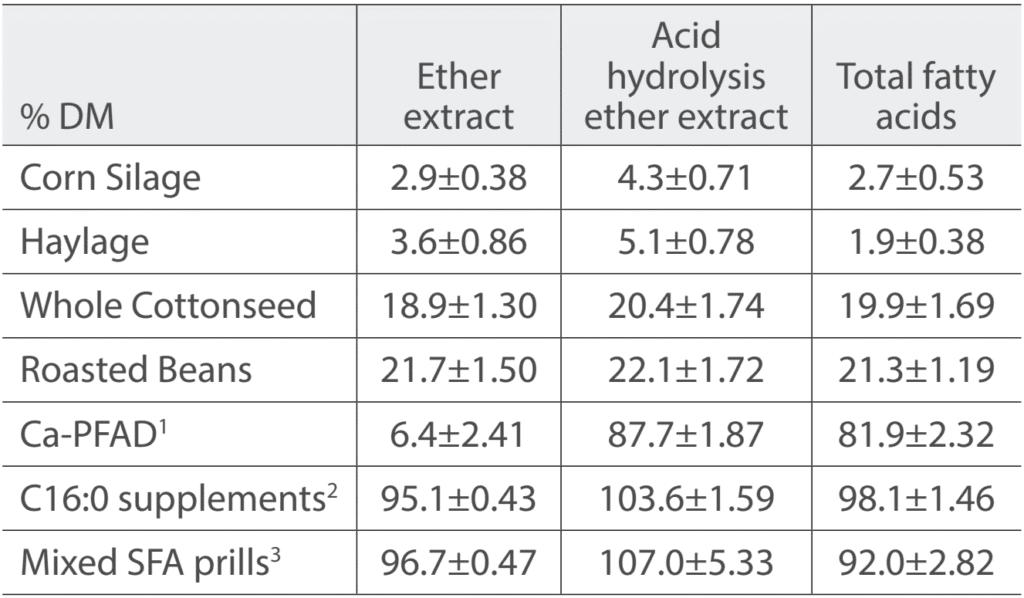
1 CA-PFAD: Ca-salts of palm fatty acids distillate; 2 C16:0 supplements are supplements enriched in palmitic acid; 3 Mixed SFA prills are hydrolyzed vegetable-animal fatty acids containing primarily palmitic and stearic acids.
We simulated the cost of nutrients for each fat supplement using the results from above. Usually, Ca-salts of PFAD are cheaper per ton compared to other supplements. When we account for the fatty acid content, and prices today in the U.S. market, C16:0 supplements have the lowest cost (Table 2). Also, C16:0 supplements have the lowest cost for 16-carbon fatty acids. CA-PFAD has a better value for 18-Carbon fatty acids. However, one should look to
individual FA in their feeding program, since individual fatty acids have a greater value to meet specific goals.
Table 2. Total fat and total fatty acids of different fat supplements and their relative cost.
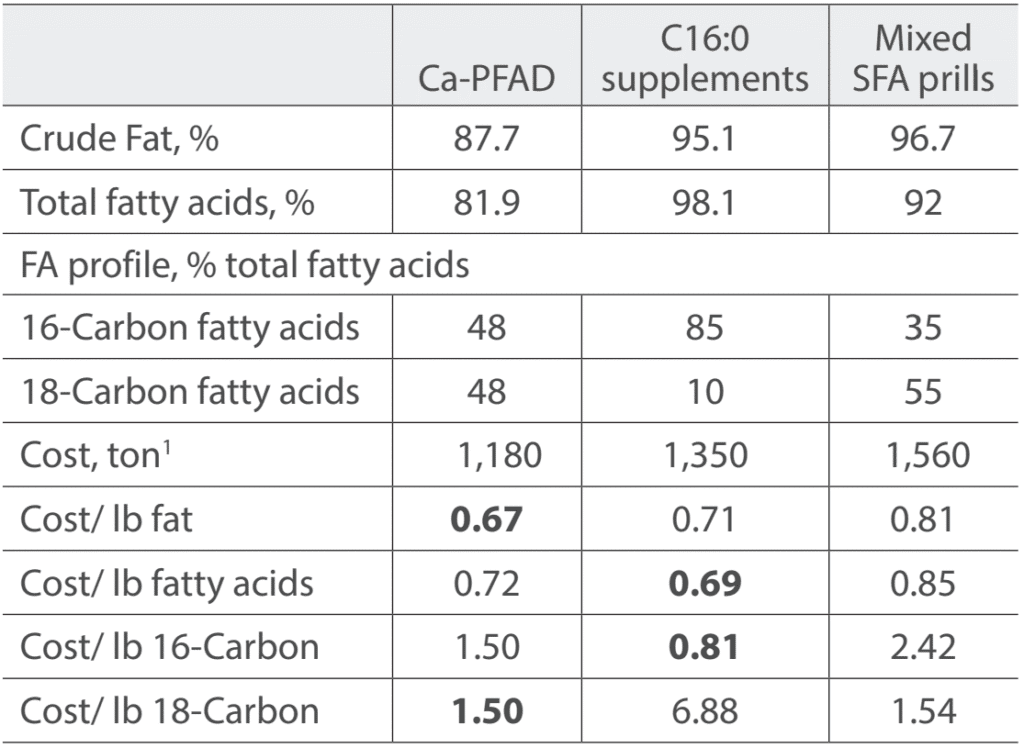
1Prices applied in the Midwest for Nov, 2023.