Science based. Research driven.®
Keeping the informed and scientific beat on amino acid and fatty acid nutrition for dairy cattle.
A Perspective on Histidine Supplementation: Lactational Performance
As dairy nutritionists look to reduce dietary crude protein to improve nitrogen efficiency, sustainability, and feed costs, focusing on supplying adequate amounts of digestible essential amino acids has become increasingly more important. Among these essential amino acids, histidine has been identified as a limiting nutrient for milk and milk protein synthesis, especially in low-protein, microbial protein-reliant diets.
Recent work analyzing more than two decades of research has reinforced the role of histidine as an essential amino acid for dairy cattle. In a comprehensive meta-analysis of 22 controlled studies, Räisänen et al. (2023) evaluated the effects of supplemental histidine on lactational performance, plasma histidine concentration, and the efficiency of histidine utilization in dairy cows. The analysis integrated studies using rumen-protected histidine, abomasal infusion, jugular infusion, and histidine-deletion infusion models across a range of diet types and production levels.
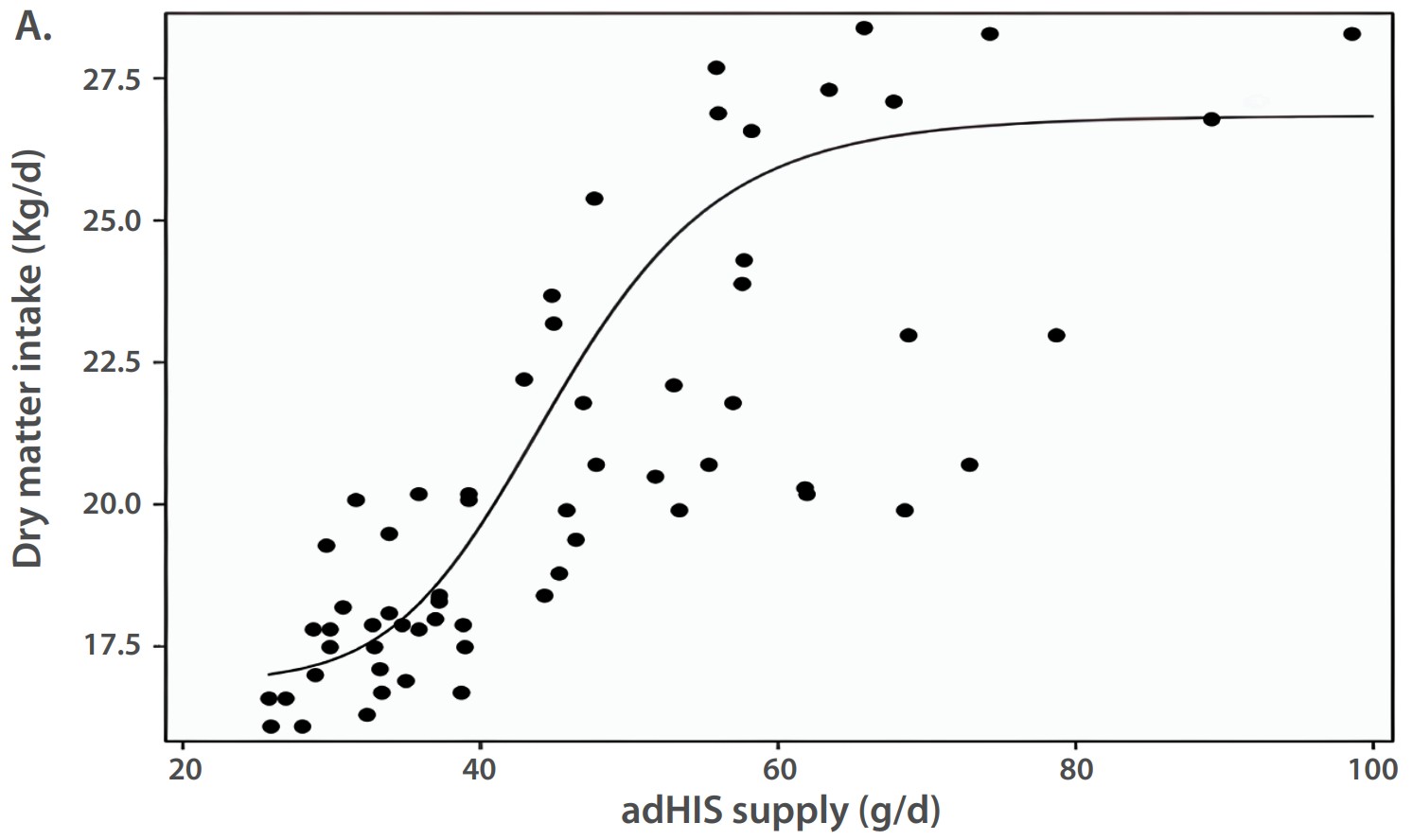
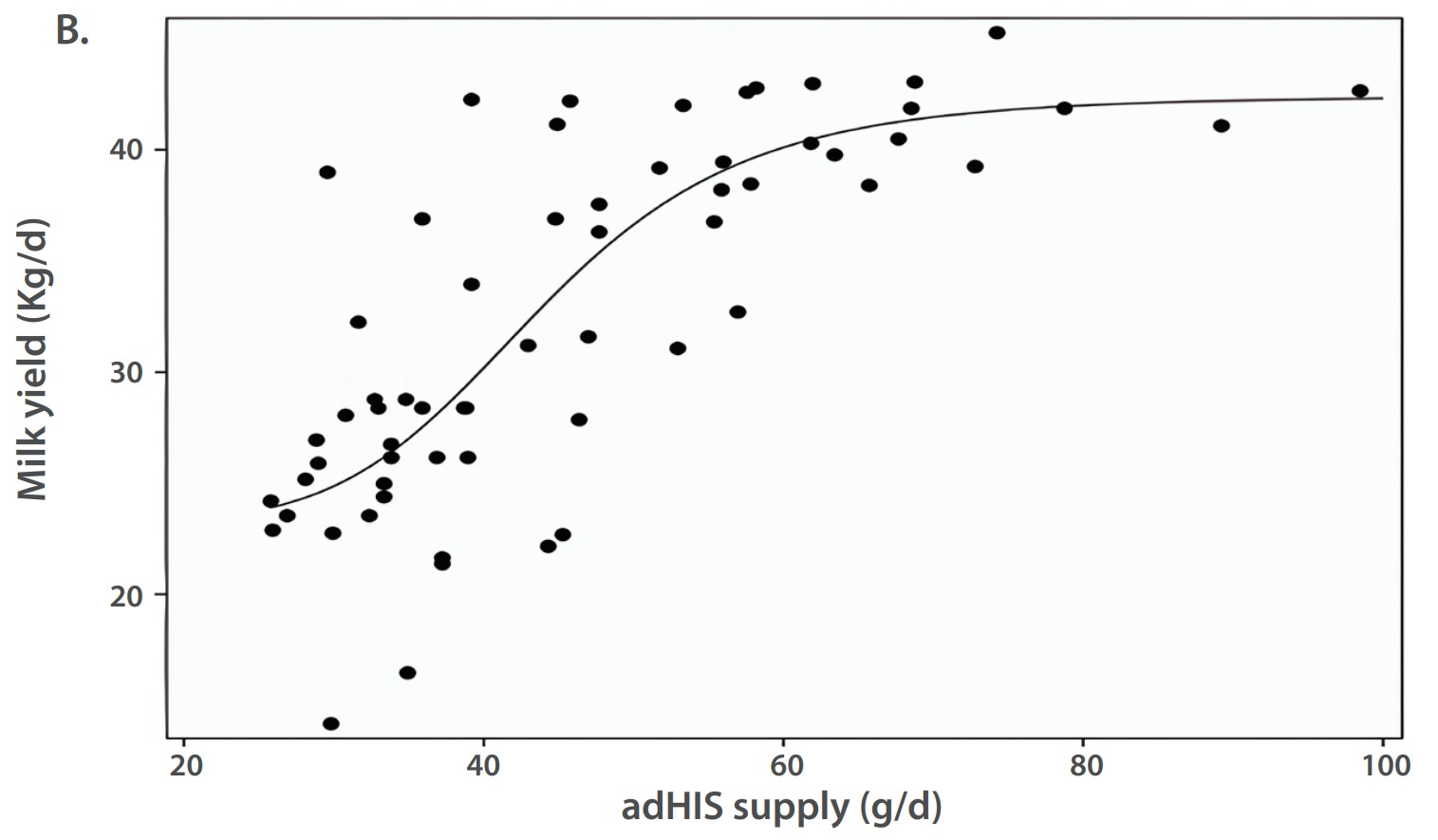
Despite differences in methodology, basal ration, and stage of lactation, a clear and consistent outcome emerged: histidine supplementation significantly increased dry matter intake, milk yield, and milk true protein concentration and yield (Figure 1; Table 1). These responses were accompanied by a marked increase in circulating plasma histidine, demonstrating successful delivery of the amino acid to post-ruminal absorption sites and ultimately to the mammary gland. The response to histidine was most pronounced when diets were deficient in metabolizable protein.
Table 1. Effect size1 and heterogeneity for the effect of His supplementation on lactational performance of dairy cows.
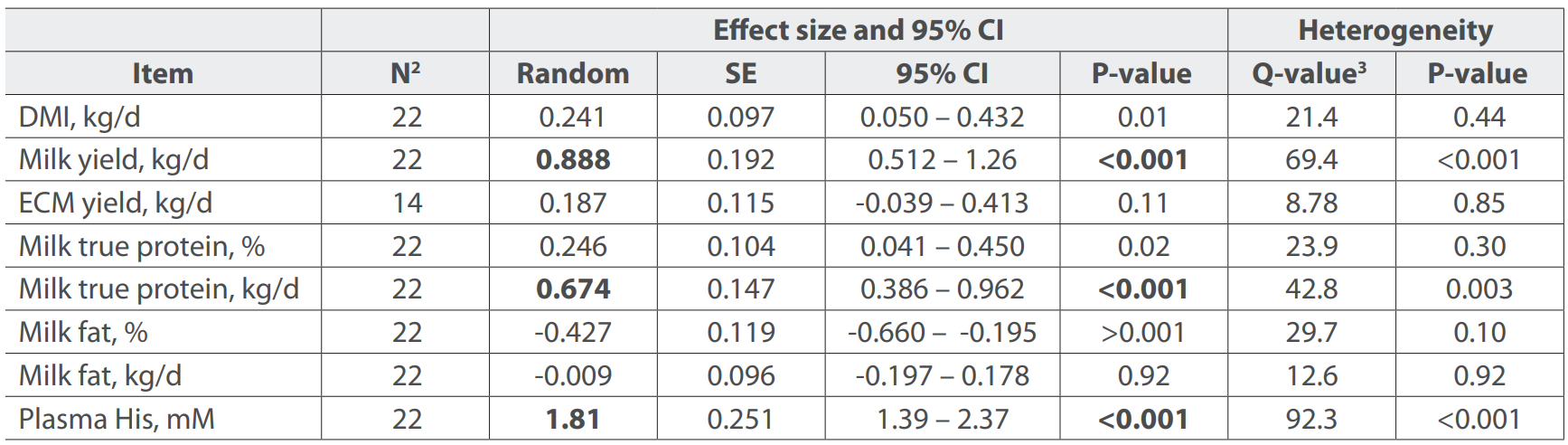
1Computed as standard mean difference = raw mean difference of treatment and control means divided by the pooled SD of the means; values of <0.2, 0.2 to 0.7, and >0.7, were considered small, moderate, or large, respectively.
2Number of studies.
3Chi-squared (Q) test for heterogeneity and variation among the study level.
4Six studies were excluded from the analysis due to lack of ECM data and respective SD in the population.
Figure 1. (A) Dry matter intake and (B) milk yield observations across increasing adjusted digestible His (adHis) supply. n = 62. Regression model fit was performed with a log logistic model, and parameter estimates were for panel A: maximum response (M) = 26.9 (SE = 0.173); lower asymptote when adHis supply is low (D) = 16.9 (SE = 0.280); rate of curve increase (K) = 8.04 (SE = 0.713); level of His at 50% of maximum response (L) = 45.1 (SE = 0.539), for panel B: M = 42.4 (SE = 0.368); D = 23.2 (SE = 0.725); K = 6.30 (SE = 0.572); L = 43.8 (SE = 0.745).